Key Takeaways
- Liquid supplements are designed for simple consumption: They’re commonly available as tinctures, drops, shots, and ready-to-drink formulas.
- Absorption can vary by product and ingredient: Some liquid supplements are marketed as easier to absorb than capsules or tablets.
- Convenience and preference may influence choice: Liquids are often selected by people who dislike swallowing pills or who want flexibility with amounts consumed.
- Shelf life and storage needs may differ: Some liquid supplements require refrigeration or have shorter stability once opened.
- No single format is best for everyone: Factors like ingredient type, amount, taste, and personal preference may all affect supplement selection.
Supplements are meant to make our lives better – boosting our energy, polishing up our diets, and reinforcing our body’s defense. While they can offer essential support for some people, supplements are typically an add-on to our healthy lifestyles, with a cost-benefit decision to determine whether they’re worth it. It’s always wise to ask:
Do I need it? Is it convenient? Does it work? Are there any trade-offs?
Plenty of products over-promise and under-deliver, and within a landscape of innovation and competition, the supplement industry is in a constant race to improve upon itself and its rivals. One swell making waves is a trend towards liquid supplements. In our fast-paced, efficient society, it seems like a no-brainer, right? For some: absolutely. But in our quest for ease, what might flow past our notice?
A Quick Dive Into Supplement Absorption
As we eat food, the chewing in our mouths, contractions in our stomachs, and assemblies of enzymes make it possible for our bodies to absorb the vitamins and minerals that we rely on to maintain our health. It takes seconds for food to get to our stomachs, where its goodies start moving and grooving. Water-soluble nutrients like B vitamins and vitamin C can start being extracted from the start. Fat-soluble nutrients, including vitamins A and E, wait for their intestinal invite before giving their wealth.
The nutrients we consume through supplements might look the same to our bodies as the ones found in what we eat. But in many cases, when, where, and how our bodies access them can differ in significant ways. One determining factor is whether you’re swallowing a solid or a liquid, an isolated nutrient or a multivitamin.
Dissolving the Solid Dilemma
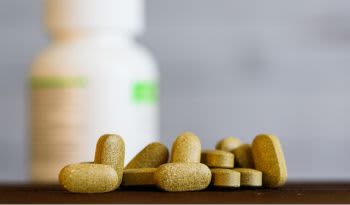
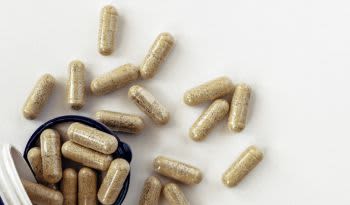
The spectrum of supplement formats is certainly expanding, but the most familiar type is the tablet or capsule. In terms of absorption, these solid formats have multiple advantages. Similar to fiber and other complex structures in food, enclosing micronutrients in a protective package has a purpose. Ideally, supplement formulas mimic the process of digesting food, allowing our bodies to take slow sips in the right place at the right time.
Binders in tablets and capsule shells slow the rate of disintegration, increasing the likelihood that nutrients reach the small intestine, where the vast majority of absorption occurs. While the stomach is the right stop for a few nutrients, some of the items in the “other ingredients” list help protect what you paid for from harsh stomach acid and deliver those precious nutrients to where they can be absorbed and put to good use. Cellulose and other plant fibers that provide bulk can even enhance bioavailability by feeding good gut bacteria. So next time you give a side-eye to “fillers”, it’s important to realize that they often have important functions and benefits.
Paradoxically, the same fillers that make tablets and capsules great vitamin vehicles can pose a challenge to the body’s normal ways of accessing and activating the nutrients it needs. Highly dependent on individual health status and biochemistry, the excipients in solid supplements can prevent efficient absorption. Recent data revealed embarrassing evidence that many tablet and capsule supplements fail to break down as intended, meaning some of your hard-earned cash is going out with a flush.
Liquids and isolated vitamins and minerals may offer easy-access nutrition with less effort expended by your body to break solids down or metabolize multiple nutrients at once. At the same time, fast-track liquids or high-potency vitamin standalones can bring too much, too soon, outpacing the body’s ability to digest, use, or store them before they’re deactivated or excreted.
Measuring Out the Benefits of Liquid Supplements
So why might liquid supplements be better? For targeted support, liquids can be more efficacious, getting nutrients to your cells on the fast track. Your body is 90% water for a reason – liquids are dynamic, efficient, and adaptable. Babies can be nourished solely on breastmilk, IVs deliver instant results to hospital patients, and chicken soup nourishes the sniffles (and the soul). You could say liquids speak our bodies’ language.
Perhaps the top attraction to liquid supplements is ease of swallowing. Whether for a health reason, a sensitive gag reflex, or a personal aversion, swallowing tablets and capsules can be unpleasant or even impossible. Liquid supplements can be added to juices or smoothies, or even poured over meals to make checking off your daily dose a delight, not a chore. This aspect is less than ideal for portability, however, making liquids a no-go for frequent travelers.
Liquid supplements also provide the unique option of tailoring your serving size a bit more easily. While you shouldn’t generally exceed the suggested use on the label unless your doctor recommends it, you can always take less based on your needs or toleration. With liquids, you can simply dole out half a serving instead of attempting to cut a tablet in half. On the other hand, an easy pour could mean an easy spill when you’re in a hurry.
Another reason that many are saying cheers to drinking your vitamins is that liquid supplements generally lack processing aids and other additives that you may wish to avoid. At the same time, fewer stabilizers and preservatives often mean that liquid products have a shorter shelf life and may even require refrigeration. Plus, carrier oils typically add a few calories that might factor in for those keeping count.
Liquid Supplements Have a Few Leaks
One potential quandary for liquid supplements is that they don’t really do slow or gradual release. Not only is there less stability and structure to guard volatile vitamins from reacting too early, but more sensitive stomachs and intestines also don’t appreciate a full helping of nutrients all at once. Amazingly, our bodies have unique pathways and processes for absorbing, activating, and transporting each essential vitamin and mineral, with a limited number of receptors and channels that recognize their match.
When your first toilet trip after your high-dose multivitamin displays a novel shade of neon yellow, say so-long to a good proportion of the riboflavin (vitamin B2) you just took. And temperamental vitamin C not only can rapidly degrade without some stabilizers (physical or chemical), large swallows of C, all at once, are generally unwelcome to the gut.
A second set of snafus for liquids proves the unchanging laws of science: oil and water don’t mix, and opposites attract. Many of our core vitamins are fat-soluble, and minerals tend to share water’s electronic charge. But there’s a reason for these restrictions. Nutrients that don’t play as well with water are carefully stored in specific tissues. Charged minerals and electrolytes are strategically meted out to their rightful places and roles, and therefore tightly regulated.
Water is polar, meaning it carries a strong positive charge, while fats are non-polar, or uncharged. Most major minerals, like calcium, magnesium, and potassium, are also positively charged. See the problem? They don’t play well with water without a bit of warming up. Minerals are typically reacted with more soluble, oppositely charged molecules to make them more absorbable. Fats don’t mingle quite so simply.
Lovin’ on Liposomes
Enter the liposome! These marvels of modern science tuck hydrophobic (aka not water-friendly) nutrients into a package that mirrors your cell membranes and help fix the leaks in liquid supplements. First, with both polar and nonpolar components, liposomes are both water- and fat-friendly. This is accomplished by using bipolar molecules, often called emulsifiers, which help everyone get along.
Next, nestled in the nonpolar center, your fat-soluble vitamin or neutralized mineral is both protected from early release and is also more gentle on the way down. So not only are liquids easier to swallow, but liposomal liquids may be a more optimal sip for your cells, too. Liposomes also tend to eliminate the unpleasant taste (or aftertaste) of some minerals. And these diplomatic liquids offer the same functions and benefits for potent and fat-soluble herbs, like turmeric.
In case you love the idea of liposomal supplements, but are less on board with liquids, liposomal technology works for solids, too. The proven benefits of emulsified nutrients have led to greater creativity for capsules and powders that optimize the delivery of fat-soluble vitamins and mood minerals. Similar to liposomes, “nanonized” and “micronized” supplements offer similar digestive advantages.
Do Liquid Supplements Go With Your Flow? Helping You Choose
Altogether, liquid supplements offer smooth sailing under the right conditions and with an eye to your individual needs. In many cases, they’re an excellent option. But depending on your port-of-call, they’re not always the best way to go. Here are a few waters to tread in determining whether liquids or solids are right for you:
Stick with solid capsules or tablets if you:
- Like precision
- Prefer portability
- Need gradual absorption
- Are particular about added calories
Try liquids if you:
- Prefer dose flexibility
- Have “pill fatigue”
- Need fast results
- Like flavor options
If you’ve been floating the idea of trying liquid supplements, there’s solid science to back them up, and they might be an efficient and more enjoyable way to fill your cup with wellness.
References:
- Löbenberg, R., & Steinke, W. (2006). Investigation of vitamin and mineral tablets and capsules on the Canadian market. Journal of Pharmacy & Pharmaceutical Sciences: A Publication of the Canadian Society for Pharmaceutical Sciences, Societe Canadienne Des Sciences Pharmaceutiques, 9(1), 40–49. https://pubmed.ncbi.nlm.nih.gov/16849007/
DISCLAIMER:
These statements have not been approved by the Food and Drug Administration. These products are not intended to diagnose, treat, cure or prevent disease.



























































 Table of Contents